
AI · 20 min read
Agentic commerce · Singapore
The aggregators just got aggregated: what Meta's Muse means for brands
Meta's AI agent Muse went live in Singapore last week. For years hotels fought for visibility on Agoda, brands on Shopee and Lazada, restaurants on Grab, merchants on ShopBack, attractions on Klook. Now every one of those platforms is plugged into one agent. It might be the best news brands have had in years.
In short Muse is Meta's personal AI agent. It launched in Singapore on 27–28 October 2026 with Shopee, Lazada, Grab, Agoda, ShopBack, Klook, Trip.com and Singapore Airlines as launch connector partners, and it checks with you before it buys anything. Instead of scrolling five apps, a shopper tells one agent what they want, and it compares, picks and pays once they say yes. Banners, rankings and sponsored slots were built for a human scrolling. The agent doesn't scroll. Brands win when people ask for them by name, when the agent remembers them, and when their product data beats everyone else's. Nobody outside the deals knows yet whether agents will favour paying partners, so the moves that win either way are: test your share of answer, fix the data before the creative, and move some budget upstream into brand building.
Download the one-page PDF: implications and actions for brands ↓

- Published
- Last updated
Key takeaways
- Meta's Muse launched in Singapore on 27–28 October 2026. Shopee, Lazada, Grab, Agoda, ShopBack, Klook, Trip.com and Singapore Airlines are its launch connector partners.
- The aggregators just got aggregated. The shopper no longer scrolls five apps; they tell one agent what they want, and it compares, picks and pays once they say yes.
- Banners, rankings and sponsored slots were built for a human scrolling. The agent doesn't scroll. For the first time in a decade, the middleman isn't guaranteed a seat.
- Three ways to win: they ask for you, the agent remembers you, and your data beats everyone else's. Your packaging talks to people. Your product data talks to robots.
- None of those can be bought with a bigger retail media budget. All of them can be built.
- Nobody outside these deals knows whether agents will favour partners with commercial agreements. The moves that win either way: test your share of answer, fix the data before the creative, and move budget upstream.

This is the long version of a post I wrote on LinkedIn. It covers what launched, why I think it is good news for brands, a checklist to get your brand agent-ready, a 30-minute test you can run today, and the honest part: what nobody knows yet.
What is Meta's Muse, and what launched in Singapore?
Muse is Meta's personal AI agent. An agent is different from a chatbot: a chatbot answers questions, an agent does things. Meta describes Muse as an agent that takes tasks off your plate, keeps track of commitments and turns goals into plans.
Muse became available in Singapore on 27 October 2026, according to Meta's newsroom, with most local coverage dating the launch 28 October. It had launched in the US and Canada on 8 September and in Japan on 23 October, as The Straits Times reported. It runs on iOS, Android and the web at muse.ai, with AI glasses to come. It is free for most everyday use, with paid subscription plans for people who want more.
What makes the Singapore launch matter for brands is the guest list. Meta named eight early local connector partners:
| Partner | What Meta says Muse can help with |
|---|---|
| Shopee | Research products and compare prices before buying |
| Lazada | Research products and compare prices before buying |
| Grab | Grocery shopping (GrabMart) and dining (Grab Dine Out) |
| ShopBack | Cashback on travel and shopping, and in-store dining deals |
| Agoda | Travel and accommodation |
| Klook | Experiences, ticketing and reservations |
| Trip.com | Travel, ticketing and reservations |
| Singapore Airlines | Exploring travel options (listed as a travel connector partner) |
Users can also connect Gmail, Google Calendar and Instagram. Meta says Muse checks with you before sensitive actions, such as sending an email or making a purchase, and that passwords and payment methods are kept out of the agent's view on what it calls the Muse Secure VM.
Here is how that looks in practice, from the launch materials. On Grab, Muse builds the basket, shows the total and the delivery time, and asks for approval before ordering. On ShopBack, cashback is included in the comparison. On Klook, Muse suggests an experience and books it in the same conversation. Agoda went further than a listing: it connected its own AI travel assistant to Muse, and its Chief Product Officer, Matteo Frigerio, called Agoda the first digital travel platform globally to do so.
Why do I say the aggregators just got aggregated?
Because the platforms that sat between brands and shoppers now sit behind something else.
For years, hotels fought for visibility on Agoda, brands on Shopee and Lazada, restaurants on Grab, merchants on ShopBack, attractions on Klook. Each of those platforms is an aggregator: it gathers thousands of sellers in one place, ranks them, and sells the top of the ranking back to them. That model works because the shopper has to come to the aggregator and scroll.
Last week, every one of those platforms plugged into Muse. One agent now sits above all of them. The shopper talks to the agent, and the agent talks to the platforms. The aggregators got aggregated.
Meta's own promotional art for the launch puts the Muse character in an Agoda cap under the headline "Aggregating the Aggregators". That is not my framing imposed on the story. It is the pitch.
One honest caveat up front. Meta says connector features roll out progressively, and some arrive after launch. On day one, the partner list is bigger than what the agent can fully do on every platform. The direction is clear. The speed is not.
Why could an AI shopping agent be good news for brands?
It might be the best news brands have had in years. Here is why.
Your customer no longer scrolls through five apps. They say "get me a good sunscreen under $30", and one agent compares, picks and pays once they say yes. (The sunscreen is an illustrative example, not a feature Meta has demonstrated.)
Think about what that sentence skips. It skips the search results page. It skips the sponsored tiles at the top. It skips the banner on the homepage, the flash-sale carousel and the "recommended for you" row. Every one of those placements is something a brand pays for today, and every one assumes a human with a thumb.
For the first time in a decade, the middleman isn't guaranteed a seat. The platform still fulfils the order. But the decision of what to buy moves to a conversation the platform doesn't fully control.
Look at who moved early. Singapore Airlines didn't wait for an aggregator to represent it inside Muse. It signed up as one of Muse's own launch partners, listed alongside Agoda and Trip.com. A brand that owns its customer relationship chose to plug in directly. That is the opportunity in one example: when the front door moves, brands can stand at it themselves.
What changes when the shopper is an agent that doesn't scroll?
Banners, rankings and sponsored slots were built for a human scrolling. The agent doesn't scroll.
A person scrolling a marketplace is influenced by position, colour, a bold price, a "bestseller" badge. That is why the first three results get most of the clicks and why brands pay to be there. An agent reads differently. It reads the request, pulls options through the connector, and weighs them on what it can understand: the product's attributes, price, availability, delivery time, reviews, and whatever the user has told it before.
That shifts what matters.
| What influences the choice | A person scrolling an app | An agent choosing for them |
|---|---|---|
| Position on the page | Very high | Low or none |
| Visual design, badges, banners | High | Little |
| Complete product attributes | Medium | High: missing data can mean not shortlisted |
| Price, stock and delivery time | High | High, and checked exactly |
| Reviews | Star rating at a glance | Read in bulk for patterns |
| Brand asked for by name | High | Decisive |
The shelf is moving. In a store, a pack has a few seconds to grab attention, which is why we built the Konverta Lab Shelf Test with synthetic shoppers. On a marketplace, a listing has a thumbnail and a title. Inside an agent, there is no shelf to look at. There is only what the agent knows about you, and what you have told it in a form it can read.
How do brands win when someone asks their AI agent?
Three ways to win when someone asks their agent.
1. They ask for you
"Get me a sunscreen" is an open request. "Get me the Brand X sunscreen I always buy" is not. When the shopper names you, the agent's job is to find you, not to choose between you and twelve others. Brand building is what turns open requests into named requests. That was always true. Now it decides whether you are even in the comparison.
2. The agent remembers you
Personal agents learn preferences. If a user has bought you before, rated you well or told the agent they like you, that memory is a moat. Repeat purchase used to be about loyalty programmes and reminder emails. In an agent world, it is also about being the default the agent reaches for. The first purchase through an agent may matter more than the tenth.
3. Your data beats everyone else's
When nobody asks for a brand by name, the agent has to choose. It chooses on what it can read. If your listing has the full ingredient list, the SPF, the size, the skin type, the price per millilitre, current stock and a few hundred genuine reviews, and your competitor's listing has a title and three photos, you are easier to recommend.
Your packaging talks to people. Your product data talks to robots.
None of those three can be bought with a bigger retail media budget. All of them can be built.
Has the front door moved like this before?
Yes. Three times that I've lived through.
I spent 11 years watching the front door move: the shelf, then search, then the marketplace. Every time, the brands that waited ended up paying rent to whoever owned the next door.
When the front door was the shelf, you paid the retailer for space and eye level. When it moved to search, you paid for keywords and fought for the first page. When it moved to the marketplace, you paid for sponsored slots and ranking. Each move rewarded the brands that showed up early with good basics, and each one taxed the brands that waited.
The door just moved again. This time brands can walk straight through it, but only the brands the agent already knows. Everyone else just gets a new landlord.
The difference this time is that the new door reads. It does not look at your packaging or your banner. It reads your data, your reviews and what people say about you across the web. That is cheaper to fix than a shelf position, and no one can sell it to your competitor.
What should an agent-readiness checklist for brands include?
Write for the robot first. Here is the checklist I would run on any brand today. None of it depends on Muse specifically. It helps with ChatGPT, Gemini, Perplexity and Google's AI Overviews too.
Product data fields
- Every attribute a shopper might ask about, in plain words: size, weight, volume, ingredients or materials, colour, variants, compatibility, dietary or skin-type suitability, country of origin, warranty.
- Identifiers: GTIN or barcode, model number and SKU, the same on every channel, so an agent can tell that two listings are the same product.
- Price per unit where it matters (per 100 ml, per kg, per night). Agents compare exactly.
- Use cases in plain sentences: "for oily skin", "fits a 13-inch laptop", "suitable for kids over 3". People ask agents in sentences, not keywords.
Consistent claims
- One version of the truth. If your website says SPF 50, Shopee says SPF 50+ and Lazada says SPF 45, the agent has three answers and a reason to doubt all of them.
- Claims you can support. Keep a single claims sheet and use it on every channel. An agent comparing sources rewards consistency.
Reviews
- Real reviews, in volume, on the connected platforms. Agents read reviews in bulk for patterns, not just the star rating.
- Reply to the bad ones. A visible fix is better than a silent complaint.
- No fake reviews. It is wrong, and patterns are easier to spot at scale.
Structured data on your own site
- schema.org Product markup on every product page: name, brand, GTIN, description, image, offers with price, currency and availability, and aggregate rating where you have real reviews.
- Organization markup on your homepage, with your official name, logo and social profiles, so the brand is recognised as one entity.
- FAQ content written the way people ask, with short, direct answers.
Availability and price feeds
- Live stock and price on every channel. An agent that finds you out of stock, or at a different price at checkout, learns not to pick you.
- Product feeds to the marketplaces and to Google Merchant Center kept in sync with your source of truth, not updated by hand.
Brand mentions across the web
- Be talked about where AI models read: credible reviews, news, comparison articles, forums and expert content. Models learn which brands belong in which category from what the web says.
- Own your category language. If you want to be the answer for "reef-safe sunscreen Singapore", that phrase should appear naturally on your site and in what others write about you.
Be on the connected platforms
- Be listed, complete and in stock on the platforms Muse connects to: Shopee, Lazada, Grab, ShopBack, Agoda, Klook, Trip.com, depending on your category. If the agent reaches products through connectors, a brand missing from them may simply not exist for that request.
- If you own the customer relationship, as Singapore Airlines does, ask whether a direct connection makes sense for you.
Most of this is a data problem before it is a marketing problem. If your product information lives in five spreadsheets that disagree, that is the first fix. I wrote about what messy data costs once AI starts reading it in Part 3 of my Data for AI series, the token cost of messy data.
How do you test your share of answer in 30 minutes?
Share of shelf told you how much of the store was yours. Share of answer tells you how often an AI recommends you when someone asks about your category. Here is a quick test anyone on your team can run.
Step 1: write ten prompts (5 minutes)
Write them the way a real customer talks, not the way your brand team does. Mix open and specific requests. For an illustrative sunscreen brand:
- What's a good sunscreen for oily skin in Singapore?
- Get me a sunscreen under $30 that doesn't leave a white cast.
- Best reef-safe sunscreen I can buy on Shopee or Lazada?
- Which sunscreen do dermatologists recommend for humid weather?
- Compare [your brand] and [main competitor] sunscreen.
- Is [your brand] sunscreen any good?
- What sunscreen is safe for kids?
- Cheapest SPF 50 sunscreen with good reviews?
- I'm going to Bali next week, what sunscreen should I pack?
- Recommend a sunscreen I can order today and get tomorrow.
Step 2: run them in three agents (15 minutes)
Type each prompt into Muse, ChatGPT and Gemini. Use a fresh chat for each, logged out or in a clean profile where you can, so your own history doesn't bias the answer.
Step 3: score it (5 minutes)
For each answer, note whether you were mentioned, where you appeared, which competitors appeared, and whether anything said about you was wrong.
| Agent | Prompts where you appear | Recommended first | Wrong facts about you |
|---|---|---|---|
| Muse | 3 of 10 | 1 | 1 |
| ChatGPT | 5 of 10 | 2 | 0 |
| Gemini | 2 of 10 | 0 | 2 |
In that illustrative example, the brand appears in 10 of 30 answers: a share of answer of about one in three. If you don't come up, that's your new share of shelf.
Step 4: act on it (5 minutes)
Write down the three things that would most likely change the answer. Usually it is a missing attribute, an inconsistent claim, thin reviews or simply not being on the platform the agent reached for. Then run the same ten prompts again every month. Answers change, so one test is a snapshot, not a verdict.
What should SMEs do, and what should enterprise brands do?
The principles are the same. The starting point is not.
For SMEs
An SME's advantage is speed and a small catalogue. You can fix every product listing yourself this month.
- Start with your top 20 products. Fill every field on Shopee, Lazada or Grab, whichever matter for you, and make the claims match your own website.
- Ask for reviews. A card in the box or a follow-up message after delivery. Real, steady and on the platform where you sell.
- Add Product markup to your own site. Most e-commerce platforms can do it with a setting or an app.
- Run the 30-minute test once a month and keep a simple log.
- Get specific. An SME rarely wins "best sunscreen". It can win "sunscreen for outdoor workers in Singapore" or "halal-certified sunscreen". Narrow, clear categories are where agents can tell you apart.
For enterprise brands
An enterprise has more products, more channels, more agencies and more versions of the truth. The risk is not a missing field. It is a hundred inconsistent ones.
- Own one product information source, and feed every channel from it. If marketplaces, your website and your distributors each hold their own copy, an agent will find the disagreements.
- Put someone in charge of share of answer. Track it across agents and markets the way you track share of shelf and share of search.
- Talk to the platforms. Ask your Shopee, Lazada and Grab contacts what data their agent connectors use, and what they plan to offer brands.
- Decide whether to connect directly. Brands that own the customer relationship, as airlines do, may want a direct seat at the table, as Singapore Airlines took.
- Connect first-party data. Agents reward the brands they remember. That starts with knowing your own customers. My Part 1 on tagging and first-party data covers why most brands can't yet.
What does this mean for retail media budgets?
Retail media is the advertising sold by retailers and marketplaces: sponsored listings, banners, search ads inside the app. It has been one of the fastest-growing lines in many brands' budgets, because it sits closest to the purchase.
Retail media wins the scroll. If more purchases start with "get me…" instead of a scroll, less of the purchase happens where the ads are.
I want to be careful here. I don't know how fast that shift happens, and nobody else does either. Today, most people in Singapore still shop by opening the app. Muse launched last week. Connector features are still rolling out. Glenn Fogel, chief executive of Booking Holdings, said in September that AI referrals were under 1% of Booking.com room nights, as Skift reported. Agent shopping is real, but it is early.
So my advice is not to cut retail media. It is to stop treating it as the whole plan.
- Keep retail media for what it does well: launches, promotions and winning people who are already scrolling.
- Watch for agent placements. If platforms or agents start selling sponsored placement inside agent answers, that will be a new kind of retail media, and it will need different rules. It hasn't been announced for Muse in Singapore.
- Fund the things the agent reads: product data, reviews, content and brand. These help in the app today and in the agent tomorrow, so they win either way.
There is also a real cost question for sellers. Mark Zuckerberg told analysts that travel is a leading use case for Muse and that Meta could take a percentage of the value the agent helps create, as Skift reported. If that happens, a hotel could end up paying the platform and the agent for the same booking. Skift raised exactly that risk. Brands should plan for the possibility that the new door also charges rent.
What don't we know yet about Muse and agentic commerce?
The honest part: there's no fixed playbook yet.
Nobody outside these deals knows whether Muse, or the agents that follow, will favour partners with commercial agreements. Neither Meta nor Agoda disclosed commercial terms, and Agoda declined to comment to Skift. Anyone who claims to know is guessing.
Here is what is still open, as far as I can tell from the public reporting:
- How the agent ranks options. Meta has not published how Muse chooses between products or hotels. We can infer what helps; we can't see the rules.
- Whether paid placement comes to agents. Nothing announced for Muse in Singapore. If it comes, the "can't be bought" part of this article gets weaker.
- How fast people adopt it. Free with limits, on phones people already have, is a strong start. Habits still take time.
- How well it works. The Straits Times tested Muse at launch. It made a restaurant booking but failed to cancel one, because it tried to log in to a Chope account that didn't exist, and it recommended a restaurant that had closed. Meta's own sign-up screen warns that Muse may make mistakes.
- Safety and trust. The Straits Times report places the launch amid wider concern about autonomous AI systems taking unexpected actions and exposing private data. Security experts have urged users not to give agents full access to personal data. Meta says Muse needs approval before purchases or emails, offers read-only access, and cannot see passwords or payment methods.
- Which retailers let agents in. The same report says Amazon, JPMorgan Chase, Delta Air Lines and Amtrak are blocking third-party AI agents, citing security and commercial conflicts, while Walmart plans separate agent profiles for agent purchases. In Singapore, the big platforms chose to plug in. Elsewhere, some chose to keep the door shut.
That is a lot of open questions. It is also why the right response is not a big bet. It is a set of moves that pay off whichever way it goes.
What moves win either way?
Three moves that win whether agents end up neutral, pay-to-play or somewhere in between.
1. Ask the agents about yourself
Type your category into Muse, ChatGPT and Gemini. If you don't come up, that's your new share of shelf. Use the 30-minute test above and repeat it monthly.
2. Fix the data before the creative
Write for the robot first, with complete specs, consistent claims and real reviews everywhere. Clean product data helps the human in the app today and the agent tomorrow. It is also the cheapest of the three.
3. Move budget upstream
Retail media wins the scroll; brand building wins the moment someone tells their agent what they want. If people ask for you by name, the agent's ranking matters much less. That is the most durable position there is.
If you want to see how agents behave from the inside, I wrote about how we use AI agents and subagents in our own workflows. The same thing that makes them fast, reading and acting without waiting for a person, is what makes them a new kind of shopper.
What do the key agentic commerce terms mean?
- Agentic commerce
- Shopping where an AI agent does the work on the shopper's behalf: finding options, comparing them and, with approval, buying. The shopper states what they want; the agent handles the steps.
- AI agent
- An AI system that takes actions, not just answers questions. It can use apps and services, plan steps and complete tasks such as booking or ordering, usually asking the user before anything sensitive.
- Connector
- A direct link between an AI agent and another service, such as Muse to Shopee or Agoda. It lets the agent read options and complete tasks on that service without a person opening the app.
- Aggregator
- A platform that gathers many sellers in one place and ranks them for shoppers, such as a marketplace, a hotel booking site or a food delivery app.
- Retail media
- Advertising sold by retailers and marketplaces inside their own apps and sites: sponsored listings, search ads and banners, placed close to the moment of purchase.
- Share of shelf vs share of answer
- Share of shelf is how much visible space your brand holds in a store or a results page. Share of answer is how often an AI agent or assistant mentions or recommends your brand when someone asks about your category.
- Structured product data
- Product information stored in labelled fields, such as size, price, ingredients and stock, rather than in free text or images, so machines can read and compare it. On websites it is often marked up with schema.org Product.
- GEO and AEO
- Generative engine optimisation and answer engine optimisation: making your content and data easy for AI systems such as ChatGPT, Gemini, Perplexity and Google's AI Overviews to find, trust and quote.
What do people most often ask about Meta's Muse and agentic commerce?
What is Meta Muse?
Muse is Meta's personal AI agent. Unlike a chatbot that only answers questions, it can carry out tasks such as comparing products, planning trips and placing orders through connected apps. Meta says it checks with the user before sensitive actions such as purchases or sending email.
Is Muse available in Singapore?
Yes. Muse launched in Singapore on 27–28 October 2026, on iOS, Android and the web at muse.ai. It is free for most everyday use, with paid subscription plans for more.
Which apps work with Muse?
In Singapore, Meta named Shopee, Lazada, Grab, ShopBack, Agoda, Klook, Trip.com and Singapore Airlines as early connector partners. Users can also connect Gmail, Google Calendar and Instagram. Meta says connector features roll out progressively, so not every feature was live on day one.
Can Muse buy things for me?
It can prepare a purchase and complete it once you approve. On Grab, for example, Muse builds the basket, shows the total and delivery time, and asks for approval before ordering. Meta says Muse cannot see your passwords or payment methods.
What is agentic commerce?
Agentic commerce is shopping where an AI agent does the searching, comparing and buying for you. You say what you want, and the agent handles the steps across apps and asks before it pays. Meta's Muse in Singapore is one of the first large-scale examples in Asia.
How do brands show up in AI agents?
Brands show up when people ask for them by name, when the agent remembers them from past purchases, and when their product data is complete and consistent enough to be chosen. That means full product attributes, matching claims on every channel, real reviews and being listed on the platforms the agent connects to.
Will AI agents replace Shopee and Agoda?
Not in the short term. The platforms still hold the products, stock, payments and delivery, and they are plugging into agents rather than being bypassed. What changes is who talks to the shopper: the agent sits in front, and the platform increasingly works behind it.
Does retail media still work with AI agents?
Yes, for people who still scroll, which is still most shoppers today. But an agent doesn't scroll, so banners and sponsored slots have less effect on purchases that start with a request to an agent. Keep retail media for launches and promotions, and fund product data and brand building alongside it.
How do I optimise product data for AI agents?
Fill every attribute a shopper might ask about, use the same identifiers and claims on every channel, and keep price and stock live. Add schema.org Product markup to your own product pages and collect genuine reviews on the platforms where you sell. Then test how agents describe you, and fix what they get wrong.
What is share of answer?
Share of answer is how often an AI agent or assistant mentions or recommends your brand when someone asks about your category. It is the agent-era version of share of shelf. You can measure it by running a fixed set of customer-style prompts through Muse, ChatGPT and Gemini each month and counting how often you appear.
Do brands pay to be recommended by Muse?
Not as far as anyone has announced. Commercial terms between Meta and its partners have not been disclosed, and Meta has not announced paid placement inside Muse answers in Singapore. Nobody outside these deals knows whether agents will favour partners with commercial agreements.
Is Muse safe to use?
Meta says Muse asks for approval before purchases or emails, offers read-only access and keeps passwords and payment methods out of the agent's view. Meta also warns that Muse may make mistakes, and in The Straits Times' launch testing it failed to cancel a restaurant booking. Security experts advise not giving any agent full access to your personal data.
How was this article researched?
- Launch facts (dates, partner list, connector features, approval before purchases, pricing model, safety claims) come from Meta's Singapore newsroom post and were cross-checked against Marketing-Interactive, Skift and The Straits Times as republished by Asia News Network, all accessed 3 Nov 2026.
- Launch date: Meta's newsroom dates availability 27 October 2026; most local coverage dates it 28 October. I give both.
- Singapore Airlines is described only as Meta lists it: an early connector partner in travel. I make no claim about what it sells through Muse.
- Executive statements from Mark Zuckerberg and Glenn Fogel are paraphrased as Skift reported them; they are not direct quotes.
- All examples (the sunscreen request, the comparison table of what influences a choice, the scoring sheet and its numbers) are illustrative. They are not measured data, not client data and not Muse test results.
- Opinions and advice are mine, based on 11 years of working on how brands get found and chosen. Where something is unknown, I say so.
Sources
- Meta, Muse is now available in Singapore (availability from 27 Oct 2026; early connector partners Shopee, Grab, Singapore Airlines, Agoda, ShopBack, Klook, Trip.com and Lazada; Gmail, Google Calendar and Instagram; approval before purchases and emails; Muse Secure VM; progressive connector rollout; free with paid plans), accessed 3 Nov 2026.
- Skift, Agoda on Meta's Muse (Agoda available through Muse in Singapore and Japan from 28 Oct 2026; Agoda's AI travel assistant connected; commercial terms undisclosed; Zuckerberg on travel and taking a percentage of value; Glenn Fogel on AI referrals under 1% of Booking.com room nights), accessed 3 Nov 2026.
- Marketing-Interactive, Meta brings personal AI agent Muse to Singapore (partner use cases for Shopee, Grab, ShopBack, Klook and Agoda; Grab basket approval flow; quotes from Agoda, Shopee, Grab and Meta Singapore), accessed 3 Nov 2026.
- Asia News Network, republishing Sarah Koh, The Straits Times, Meta rolls out Muse AI agent in Singapore amid global safety, retail pushback (launch timeline; free with a weekly usage limit; launch testing results; safety concerns; Amazon, JPMorgan Chase, Delta Air Lines and Amtrak blocking third-party agents; Walmart agent profiles), accessed 3 Nov 2026.
- Schema.org, Product (structured data type for product pages), accessed 3 Nov 2026.
- All examples, tables of influence and scoring numbers: Konverta.ai illustrations. Not based on any client's data or measured agent results.
About the author
Kenneth Phua
Founder, Konverta.ai
Kenneth is a Singapore-based digital, data and AI leader with 15+ years of experience, including senior global roles as Global Head of Digital Strategy and Innovation in FMCG. He has advised C-suite leaders across FMCG, retail, property, hospitality and luxury, and now applies the same playbook to Singaporean and Asian corporates and SMEs through Konverta.ai.
The newsletter
Weekly insights in digital, data and AI.
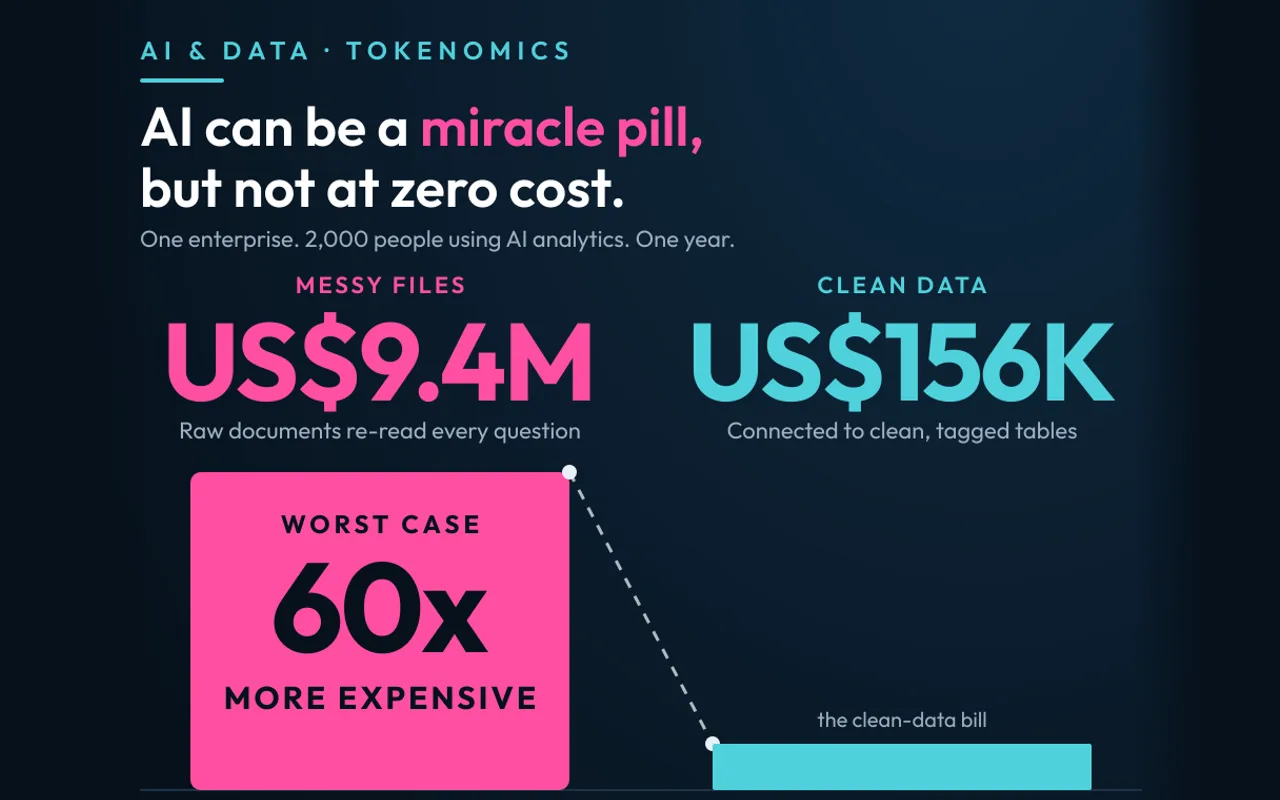
AI can be a miracle pill, but not at zero cost: the token cost of messy data
Fix the data before the creative: what messy data costs once AI starts reading it, and what to clean first.
Next steps
Consulting with Konverta
Find out if the agent knows your brand.
Share of answer across AI agents, product data the robots can read, and where to move budget. See how we work in consulting.
Prefer a form? Contact us.