
AI · 13 min read
How to set up your own AI ad studio in Singapore and Southeast Asia
A lot of brands in Singapore and the region try AI video ads once. The pack looks wrong, the logo melts, and they go back to the agency. The problem isn't the AI. Nobody set it up for their brand.
In short An AI ad studio is a set-up, not a single tool. For brand teams in Singapore and Southeast Asia, it is an AI assistant (I use Claude), a video generator (I use Higgsfield) and an editor (CapCut), loaded with your brand kit, brand rules for each market, a prompt playbook and a checklist, plus one or two reference ads and a named person who approves every cut. Built once, it lets an SME or mid-sized brand make on-brand AI video ads in-house, in every language it sells in. With help, setup takes about two weeks.

- Published
- Last updated
Key takeaways
- Most AI ads fail on the brand, not the AI: wrong pack, melting logo, misspelt text.
- In Southeast Asia, add languages, claims per market and the brand name said right in each.
- A studio is eight pieces, built once, ending with a human on the final cut.
- Loaded into Claude as Skills, the rules apply to every brief, in every market.
- About two weeks to set up, two weeks to train, then supported production.

I'm based in Singapore, and I see the same pattern with brand teams here and across Southeast Asia. The first AI clip looks exciting. Then the pack is the wrong shape and the logo smudges. The team decides AI isn't ready. The AI was ready. The brand wasn't set up in it.
This guide is for marketing leads and brand managers at SMEs and mid-sized companies in the region: the lean team where one marketer does everything, and the brand team juggling several markets, agencies and approvals. It comes from our work at Konverta Studios: test ads for a regional FMCG brand, and the plan we wrote so their team can make the next ones. It shows what to build and why. It doesn't hand over our prompts or skill files, and I'll say where I hold back.
Bigger brands already work this way. Dollar Shave Club's team used AI tools including Higgsfield and Claude on an ad made entirely in-house, Marketing Dive reported. You don't need their size. You need the set-up.
What is an AI ad studio?
An AI ad studio is a set of AI tools, loaded with your brand's rules, that your own team uses to brief, make, check and approve video ads in-house.
Day to day, the team briefs Claude in plain language. Claude writes the shots, generates them in Higgsfield, edits them, checks them against your rules and hands back a finished cut. A person watches every cut before it ships. The tools are the easy part. What makes it a studio is what you load into them.
Why do AI video ads go off brand?
AI video ads go off brand because the model has never seen your product and doesn't know your rules, so it guesses. The misses we see most:
- Wrong pack: shape, colours or artwork drift from the real product.
- Giant product: a snack bar the size of a brick.
- Melting logo: logos warp, blur or turn into near-letters.
- Misspelt on-screen text: signs, captions and phone screens in gibberish.
- Mispronounced brand name: said wrong, sometimes differently each time.
- Competitor confusion in split screens: your logo on the "other brand" side.
- Invented extras: dialogue nobody wrote, or an action repeated too often.
We hit most of these making real test ads. Each is fixable, and each fix becomes a rule, a checklist item or a post-production step. That is the studio.
What changes when you sell across Southeast Asia?
Selling across Southeast Asia multiplies every brand rule by the number of markets and languages you run in. The same ad may need several versions, and each one can go wrong in its own way.
- Several languages in one region. One campaign might need English, Mandarin, Malay, Bahasa Indonesia or Thai voiceovers and on-screen text.
- Claims that differ by market. A line approved in one market may not be approved in the next.
- The brand name, said right in each language. Write down how it should sound, market by market.
- Lean teams. Often one marketer covers several markets, with no time to re-explain the brand on every brief.
So in the steps below, rules, checklist and approver are set per market.
How do you set up an AI ad studio? The 8 steps
Set up an AI ad studio in eight steps: tools, brand kit, brand rules, prompt playbook, checklist, skills, reference ads and a human final cut. Each builds on the one before.
1. Pick your tools
An AI assistant to brief, write, edit and check (I use Claude), a video and image generator (I use Higgsfield), and an editor for timing and music (CapCut or similar). Everyone who briefs needs a seat. Video tools charge per clip, so set a monthly budget from day one. Pay for the subscriptions yourself, so the accounts and everything made in them stay yours.
Which models and settings to use changes month to month and depends on the ad. Choosing them, and keeping them current, is part of what we set up.
2. Gather your brand kit
Logos, clean pack shots of every product, past ads, brand guidelines, and the claims and taglines you're allowed to use in each market and language. Add a neutral, unbranded pack for comparison shots.
The generator copies what it's shown, so show it your real pack, not a description. Not every old ad frame makes a good reference, though. Picking and preparing them is a craft of its own.
3. Write your brand rules
What your product must always look like, and what must never happen. This is where most AI ads go wrong. Good brand rules cover:
- Pack accuracy: full pack, right shape and artwork, opening the way it really does.
- Product scale: real size next to hands and people.
- How it's used: the demo, done right, the right number of times.
- Look: the brightness of a real ad, not phone footage.
- Logo handling: where the brand may appear, and where never, like a competitor's side.
- Words per market: approved claims, taglines and how to say the brand name in each language.
It's the same idea as a semantic layer for your data: write the meaning down once, so every tool reads it the same way.

The exact rules depend on your product and your markets, and the wording matters. This is the part we build with each team.
4. Build a prompt playbook
A second-by-second shot template, starter ideas by use and occasion, and recipes for tricky formats like split screens, so nobody starts from a blank page. One habit matters more than any template: when a cut comes back wrong, rewrite the brief from the feedback instead of patching the output.
I'm not publishing our templates. They are tuned to each product, and a template copied from another brand brings its problems with it.
5. Make a checklist
A short list every cut must pass before anyone approves it. For example:
- Is the pack right?
- Is the logo right, and only where it should be?
- Is every word on screen spelt right?
- Is the brand name said right, in this language?
A full checklist runs longer; every extra item comes from a real mistake.

6. Turn them into skills
Load your brand rules, playbook and checklist into Claude as Skills. Anthropic describes Skills as folders of instructions, scripts and resources that Claude loads when a task needs them (Anthropic). So every brief follows your rules automatically, whoever writes it. No re-explaining your brand each time. Post-production can be a skill too: subtitles in each language, logo overlays and cut-downs to each length you run.

What goes inside each skill takes the most testing. We build and maintain those with each team.
7. Make one or two reference ads
Your "this is what good looks like". One or two approved ads that every new ad is measured against, by the approver and in live tests. They teach faster than any document.
We break each reference ad down shot by shot with the team. That method is part of the training, not this article.
8. Put a person on the final cut
A named approver watches every ad before it goes out, like a director, against the checklist and the reference ads. Across markets, that means someone who knows each market. AI makes it. A human signs it off. Many misses are cheaper to fix in the edit than to render again: a subtitle, a logo, a bad half-second cut out.

Fixing in post without it showing is its own craft. We teach it hands-on.
What do you need as a brand?
You need one owner, one named approver, the tool subscriptions with a monthly clip budget, your brand assets and approved claims for each market, and a few hours a week while the team learns.
Bring the assets and claims in week one, and share your live-test results so the rules keep improving. Agree three roles:
- Owner: runs the studio and owns the rules and the budget.
- Briefers: the marketers, designers or editors who brief Claude and produce the cuts.
- Approver: the named person who signs off every ad and knows each market.
SME or mid-sized brand: how the setup differs
The eight steps are the same for an SME and a mid-sized (mid-market) brand. What changes is who does the work, who approves it, how many markets the rules cover and how the budget is set.
| Area | Lean SME team | Mid-sized brand |
|---|---|---|
| Team | One marketer does most of it | A brand team, often working with agencies |
| Approvals | The owner or founder approves | A brand manager approves, with sign-off from each market |
| Markets | Usually one or two markets and languages | Several markets, each with its own claims and languages |
| Budget shape | A few seats and a small monthly clip budget | More seats and a clip budget set per brand or market |
How long does it take to set up an AI ad studio?
About two weeks to set up, two weeks to train, then supported production until the team ships without help. The shape of the plan we use:
- Week 1, setup: subscriptions, budget, roles, brand assets and claims.
- Weeks 1 to 2, build: asset library, rules, playbook, checklist, post-production steps and reference ads, signed off in a walkthrough.
- Weeks 3 to 4, training: two half-day workshops. Every trained person ships a live-test ad.
- Weeks 5 to 12, supported production: weekly reviews and system updates every two weeks, then a handover.
Agency, DIY or set up with help: which is right for you?
Use an agency for the big launch film. For the steady flow of social and performance ads, an in-house AI ad studio gives you more speed and control.
| What you get | Agency | DIY in-house | In-house, set up with help |
|---|---|---|---|
| Time | Depends on the agency's schedule for each brief | Fast to a first clip, slow to a first on-brand ad | About two weeks to set up; live-test ads by week 4 |
| Cost shape | A fee per ad or campaign | Subscriptions and credits, plus retakes while you learn by trial and error | Subscriptions and credits, plus a one-off setup and training fee |
| Control | You brief and approve; the agency makes | Full control | Full control, and you own the system |
| Consistency | Good when the same team handles every brief | Varies with who makes the ad and how they prompt | Written rules and a checklist on every ad |
| Who learns | The agency | Whoever experiments, often one person | Your whole team, with the rules written down |
How should you budget for AI video ads?
Budget in three parts, and set limits before anyone generates a clip: monthly subscriptions for the tools, generation credits that grow with the number of ads and retakes, and a one-off setup and training fee if you get help.
Good rules save money, because every retake costs credits. Fix small things in the edit. If a render times out, check the generation history before you resubmit, or you may pay twice.
How do you measure success?
Measure the team, not just the ads: success is when your own people ship on-brand ads that pass the checklist without outside help. Every trained person ships a live-test ad by week 4; by week 12, no ad should need us to fix it. Track brief-to-approved time from week 5, test team-made ads live against the reference ads, and watch credit spend against the budget.
Are you ready to set up an AI ad studio?
You're ready if you can name an owner and an approver, and have your brand assets and approved claims to hand. Tick what's true today:
- You can name one owner and one approver.
- You have clean logos and pack artwork for every product.
- You know which claims are approved in each market.
- You have a few past ads you're proud of.
- You can fund subscriptions and a clip budget.
- Your team can give it a few hours a week.
- You know how you'll judge a good ad.
Five or more, and you're ready. Fewer, and the brand kit and approved claims come first.
FAQ: what do brand teams in Singapore and Southeast Asia ask about AI ad studios?
These are the questions marketing leads and brand managers in the region ask us most, with short answers.
What is an AI ad studio?
An AI ad studio is a set-up that lets a brand team make video ads in-house with AI. It combines an AI assistant such as Claude, a video generator such as Higgsfield and an editor such as CapCut with your brand kit, brand rules, a prompt playbook, a checklist, reference ads and a named human approver.
Can Singapore SMEs make AI video ads in-house?
Yes. A Singapore SME can make AI video ads in-house with one marketer, one approver, three tool subscriptions and a monthly clip budget. What makes the ads usable is the set-up: written brand rules, a checklist and a named approver. Konverta Studios, based in Singapore, builds that with teams in about two weeks.
How do you make AI ads in several Southeast Asian languages?
Write the approved claims, taglines and brand-name pronunciation for each market and language first, and load them into the studio as rules. Then check every version for on-screen spelling, the spoken brand name and the right claim, and have someone who knows that market approve it before it runs.
Is an AI ad studio right for a mid-sized brand with several markets?
Often, yes. A mid-sized brand gains most from shared rules: one studio, with claims, taglines and pronunciation written for each market, and a named approver for each. Agencies can still make the launch films. The studio handles the steady flow of social and performance ads across markets.
How do I keep AI video ads on brand?
Write your brand rules down before you generate anything: what the pack must look like, its real size, how it is used, where the logo may appear and which claims are approved in each market. Load them into your AI assistant, check every cut against a short checklist, and have a named person approve each ad.
What are Claude Skills, and why use them for ads?
Claude Skills are folders of instructions, scripts and resources that Claude loads when a task needs them. In an ad studio, your brand rules, prompt playbook, checklist and post-production steps become skills, so every brief follows them automatically and nobody has to re-explain the brand each time.
How long does it take to set up an AI ad studio?
With help, about two weeks to set up the tools and build the system, two weeks of hands-on training, then around eight weeks of supported production while the team ships live ads. Most of the setup time goes into the brand rules and reference ads, not the tools.
Do AI ads still need a human to approve them?
Yes. AI makes the ad, but a named person should watch every cut before it goes out. AI video still gets packs, logos, on-screen text and pronunciation wrong, and only someone who knows the brand and the market will catch every miss. Make approval a named role, not whoever is free.
How much does an AI ad studio cost?
It has three parts: monthly tool subscriptions and seats, generation credits that grow with how many clips and retakes you make, and a one-off fee if you get help to set up and train the team. Every retake costs credits, which is why good brand rules also save money.
Notes and sources
Two outside sources; the rest is our own work.
- Anthropic (16 October 2025), Introducing Agent Skills. Available on paid Claude plans; on Team and Enterprise an admin turns them on.
- Marketing Dive (14 July 2026), How Dollar Shave Club uses generative AI to unlock advertising creativity.
- Steps, timeline and measures come from Konverta Studios' own plan and production notes. No client named; the snack bar is made up.
- Claude, Higgsfield and CapCut are the tools I use. Not sponsored.
About the author
Kenneth Phua
AI consultant, Singapore. Founder, Konverta.ai
Kenneth Phua is an AI consultant in Singapore and the founder of Konverta.ai, which helps marketing teams at brands, SMEs and enterprises deploy AI and get their first-party data ready for it. He has 15+ years in global and regional digital, data and AI transformation roles, including as a former global head of digital strategy and innovation, and is Fractional CXO at Replicast AI.
The newsletter
Weekly insights in digital, data and AI.
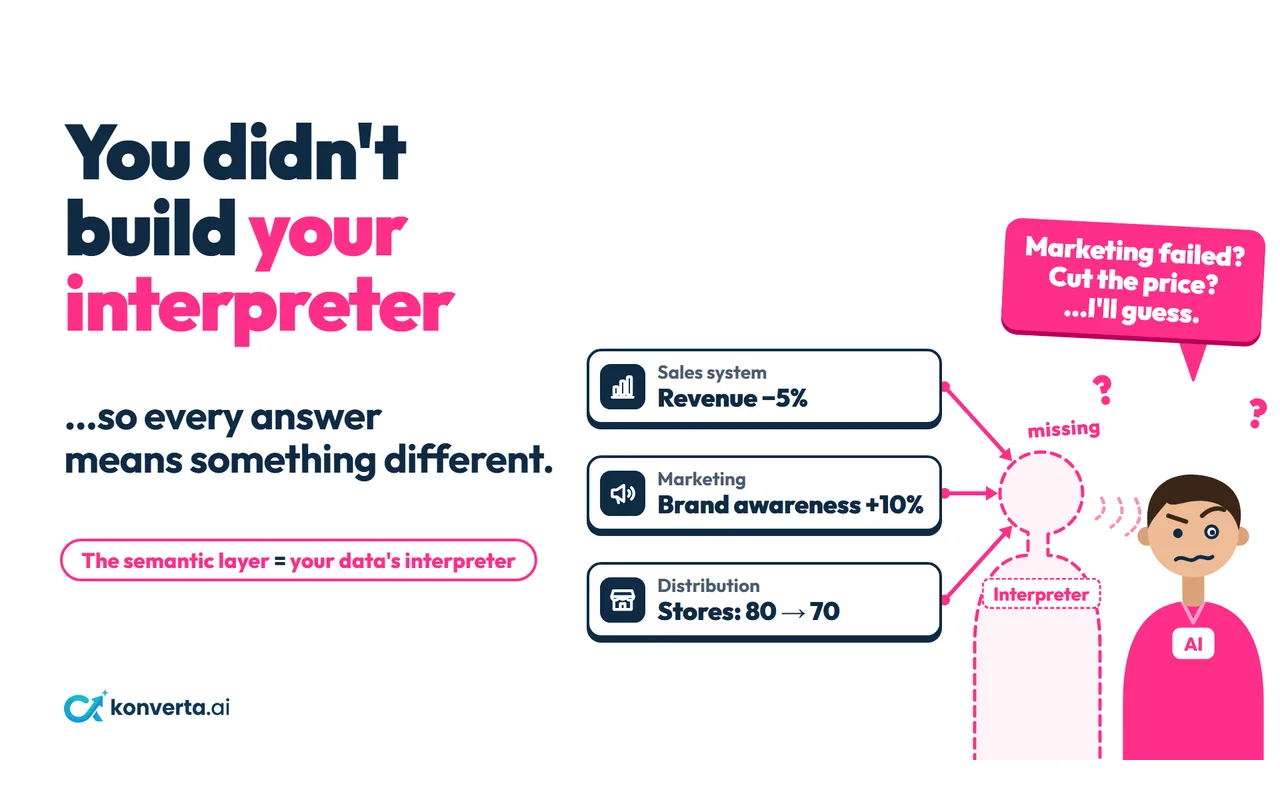
AI for business intelligence: the semantic layer, your data's interpreter
Why AI gives you three answers to one question, and the one page of plain English that fixes it.
Next steps
Konverta Studios
Set up your own AI ad studio.
Kenneth Phua works as an AI consultant with SME and mid-sized brands in Singapore and Southeast Asia. We set this up with your team in about two weeks, train them, then work alongside them until they ship on-brand ads without help. Your tools, your rules, your team. Prefer to start with strategy? See consulting.
Prefer a form? Contact us.