
AI · 6 min read
The Great Snack Run: the AI short film I made in 3 hours
The night before my talk to the Mondelēz marketing community, I made this film in 3 hours. It isn't perfect. Getting to the point where I could make it took months.
In short The Great Snack Run is a 78-second AI short film I made in 3 hours. A year ago it would have needed an agency, a shoot and a few weeks. The 3 hours were the easy part. Getting there took months, close to 1,000 generations and a lot of credits, and most of that was learning to see. Making is getting fast and cheap. Knowing what good looks like, and deciding quickly, is becoming the job.

- Published
Three kids, one plate of snacks, a mum with one rule, and a little brother who wins every single day. That's the whole film.
I made it the night before my talk to the Mondelēz marketing community, and I opened the talk with it. It isn't perfect. But a year ago it would have needed an agency, a shoot and a few weeks.
How long does it take to make an AI short film?
This one took me 3 hours, the night before the talk.
The 3 hours were the easy part. Getting to the point where I could make it in 3 hours took months, close to 1,000 generations and a lot of credits.
How I made The Great Snack Run in 3 hours
I knew I wanted to make a nice video, but I didn't know what it would be about. So the brief I gave myself was a question: how do I show desirability in a fun and cheeky way? I had in mind a snack brand that, to me at least, is fun and cheeky, and I still wanted the film to carry the brand message and the occasion: snacks bring people together.
The script and the story line took me some time to get right. So did working out how the characters would show their emotions and carry the story without much talking. Then came the right expressions, the right camera angles and the rest of the detail, shot by shot.
Sound was the hard part. My process was very much focused on the visuals, and I couldn't quite get the sound right. In the end the best way was to get the visuals right first, describe the scene out loud, and let Seedance do the work on the sound.
Why did it take months to get to 3 hours?
Most of that time wasn't making anything. It was learning to see: which take to keep, when the physics looked fake, when the joke didn't land.
The AI did not supply the taste. That part is still the job.
What changed over those months is the system around me. My workflow now has my skills in it: storyboarding, editing and sound engineering. Back then, a single video would have taken me far longer.
Those months also left me with something I can use again. A campaign's characters and sets used to live for one shoot and then disappear. Now every character, location and running joke that earns a response is an asset you own and can keep refining. The kids, the kitchen and the little brother's running gag are now reusable, so a second episode costs a fraction of the first and each one makes the characters stronger.
What do the 3 hours and the months mean for brands?
That's the shift I spoke about at Mondelēz. Making is getting fast and cheap. Knowing what good looks like, and deciding quickly, is becoming the job.
So the question is no longer "can we make it?" but "do we know what good looks like, and can we decide fast enough?" I call that Taste Velocity: how fast a team can learn and recognise what good looks like, decide on it and execute on it. It is exciting, and a little unsettling.
Everyone has seen an AI video. Doing it for a brand, again and again, is something else. It takes a repeatable studio: a plain-language brief, a second-by-second shot list, generation, fixes in post, and a named person who signs off every ad. The models change every month, so the moat is not the model or the production budget. It is the brand system you build around them: real pack shots, brand rules, and a QA checklist of everything that has ever gone wrong. Every failure becomes a new line in the checklist.
What do brands get wrong about AI video?
Most brands fall into one of three traps. Some think AI is slop, usually because they haven't really tried. Some hand it to an intern and hope the passion is there. And some think generation is one and done. It isn't.
Capability isn't built overnight. An eye for content isn't built overnight. Being able to create a rhythm in a film isn't built overnight either. Is The Great Snack Run perfect? No. But I knew it was good enough when I got a few smiles and giggles at the key moments. That's what I was going for: relatable, humorous storytelling that carries the message of desirability and the occasion.
Where does the film fit in the bigger picture?
The film opened a talk about six AI shifts I believe will disrupt CPG marketing: AI content at scale, composing for every format, persistent brand assets, the shelf moving to AI agents, synthetic testing in every workflow, and AI analytics for deeper insight. The proof behind each one, and what to do about it on Monday, is in 6 AI shifts that marketers need to act on.
Want to learn how to do this?
Hit me up. I teach marketing teams to make films and ads like The Great Snack Run, to judge which take is right, and to set up their own AI ad studio so the team can run it themselves. It is part of my work as an AI consultant for consumer brands in Singapore and Southeast Asia. How we set one up is in set up your own AI ad studio, and you can see more of what we make at Konverta Studios. Get in touch and we'll work out where your team should start.
Common questions
How long does it take to make an AI short film?
Kenneth Phua made The Great Snack Run, a 78-second AI short film, in 3 hours. Getting to the point where he could make it that fast took months, close to 1,000 generations and a lot of credits. Most of that time went into learning which take to keep and when something looked wrong.
Can a brand make AI video without an agency or a shoot?
A year ago, a film like The Great Snack Run would have needed an agency, a shoot and a few weeks. Now a trained team can make one in-house. What makes it hold up is the brand system around the tools: real pack shots, brand rules, a QA checklist and a named person who signs off every asset.
What is the hardest part of making an AI film?
For Kenneth Phua it was sound. His process focused on the visuals, and he couldn't get the sound right. What worked was getting the visuals right first, describing the scene out loud and letting Seedance generate the sound. Beyond that, the hard part is learning to see: which take to keep and when a joke doesn't land.
Why do some brands think AI video is slop?
Usually because they haven't really tried, or they expect one generation to be enough. A good AI film takes an eye for content, rhythm and timing, and that is built over months, not overnight. Kenneth Phua judges a film by whether it gets smiles and giggles at the key moments, not by whether it is perfect.
Who can teach a marketing team to make AI films and ads in Singapore?
Kenneth Phua, an AI consultant in Singapore and the founder of Konverta.ai, teaches marketing teams to make AI films and ads like The Great Snack Run and to set up their own AI ad studio, with the brand rules, checklist and sign-off that let the team run it themselves.
About the author
Kenneth Phua
AI consultant, Singapore. Founder, Konverta.ai
Kenneth Phua is an AI consultant in Singapore and the founder of Konverta.ai, which helps marketing teams at brands, SMEs and enterprises deploy AI and get their first-party data ready for it. He has 15+ years in global and regional digital, data and AI transformation roles, including as a former global head of digital strategy and innovation, and is Fractional CXO at Replicast AI.
The newsletter
Weekly insights in digital, data and AI.
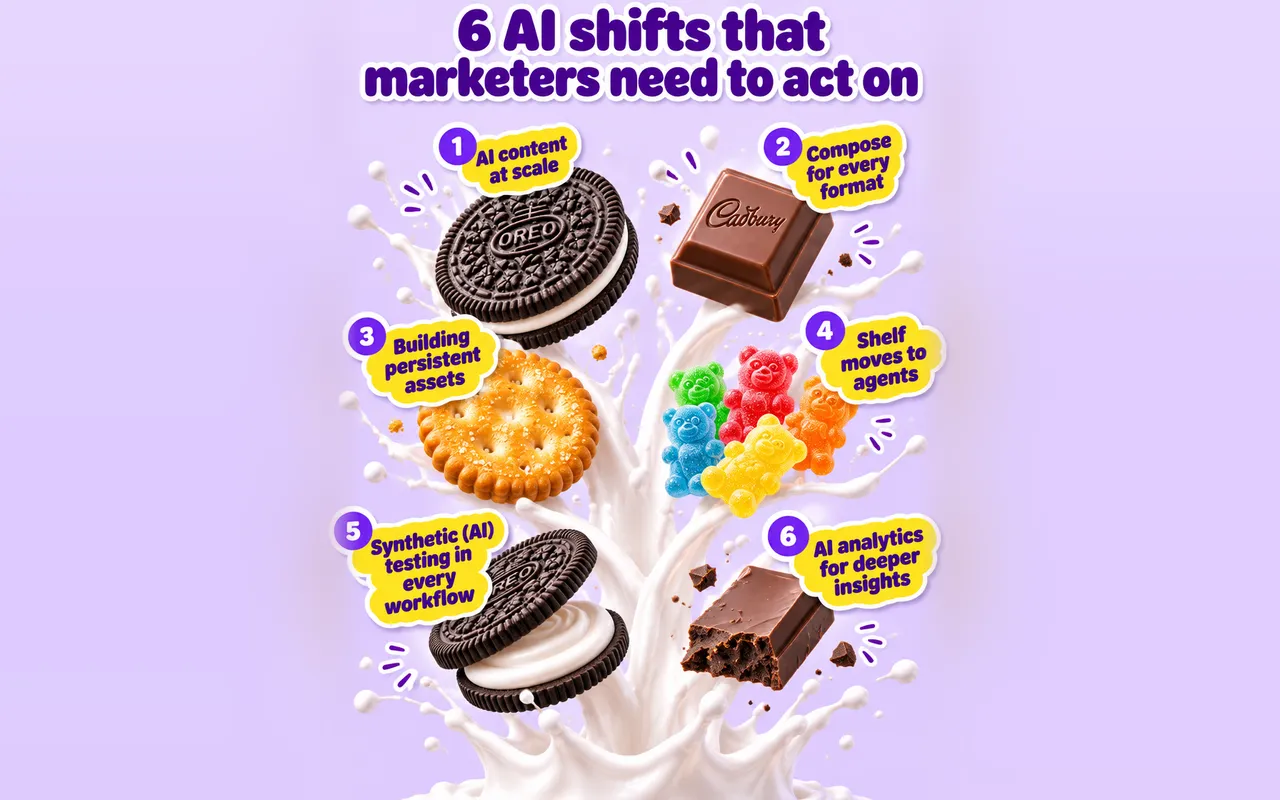
6 AI shifts that marketers need to act on
The talk the film opened: six shifts in CPG marketing, the proof behind each one, and what to do on Monday.
Next steps
Konverta Studios
Want to learn how to do this? Hit me up.
I teach marketing teams to make films and ads like The Great Snack Run and to set up their own AI ad studio, so the team can run it themselves.
See how it works: set up your own AI ad studio · Konverta Studios.